In Colorado Springs, spring rain is more than a seasonal inconvenience—it can be a significant factor in car accident liability. Drivers may assume that road hazards caused by wet conditions are common knowledge, but the reality is that insurance companies and courts consider specific behaviors and circumstances when determining fault. The Law Firm of Mark S. Hanchey and Ben Peterson helps clients navigate these situations, ensuring that all environmental factors, including weather conditions, are appropriately documented and considered in claims. Wet roads, reduced traction, and visibility challenges can all influence fault assignments, making professional guidance crucial in achieving a fair outcome.




How Fault is Determined in Colorado 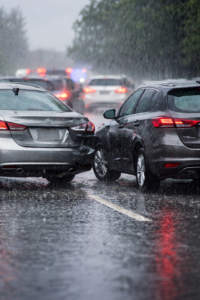
Colorado operates under a modified comparative fault system, which means that responsibility for an accident can be shared among drivers depending on their actions. Each party’s negligence is assigned a percentage, which then affects potential compensation. Even in ideal weather, a driver can be found partially at fault for failing to exercise reasonable care. Spring rain introduces additional complexity, as it can obscure hazards, increase stopping distances, and lead to behaviors such as overcompensating or driving too fast for conditions. Courts and insurance companies carefully examine whether each driver acted reasonably given the circumstances, including the presence of rain, road conditions, and traffic patterns.
Driving Challenges Posed by Spring Rain
Spring rain creates multiple hazards that can significantly affect accident outcomes. Slippery roads are perhaps the most obvious danger, as rain reduces the friction between tires and asphalt, increasing the likelihood of skidding and hydroplaning. Pooled water can conceal potholes, debris, or uneven surfaces, making even cautious driving risky. Visibility is often compromised, with rainfall, windshield glare, and fog reducing the ability to spot hazards in time to react. Additionally, stopping distances increase in wet conditions, meaning that a driver who follows too closely or fails to adjust speed appropriately may share responsibility if a collision occurs. Each of these factors plays a role in determining whether a driver exercised reasonable care.
When you need legal help, Mark Hanchey and Ben Peterson are here to guide you through it all. One step at a time. Reach out today for legal support. Get The Law Firm of Mark S. Hanchey and Ben Peterson fighting for you.
With You Every Step of the Journey
Legal Considerations in Weather-Related Accidents
When spring rain contributes to a crash, investigators consider the totality of the circumstances to determine fault. Key elements include the speed of each vehicle relative to the road conditions, whether a safe following distance was maintained, the condition and maintenance of the vehicles involved, and adherence to traffic laws. For example, if a driver’s tires are worn or their windshield wipers malfunction, this may indicate negligence, even in rainy conditions. Conversely, if a driver exercises appropriate caution but another driver fails to adjust speed or obey traffic signals, liability may be shifted to the negligent party. Establishing these details often requires careful evidence collection, including photographs, witness statements, and police reports.
Documenting the Scene After a Rain-Related Collision
Proper documentation is critical to ensuring that weather conditions are accounted for in any claim. Drivers should take photographs of the road, vehicle damage, and visible weather conditions immediately following an accident. Collecting witness statements while details are fresh and obtaining a thorough police report noting rain, water accumulation, and visibility issues are essential. Dashcam footage or security camera recordings can also provide objective evidence of the accident’s circumstances. These measures help clarify the role that spring rain played in the crash and strengthen any claim by demonstrating a clear chain of causation.
Common Scenarios Where Rain Influences Fault
Several common types of collisions illustrate how spring rain affects fault determinations. Rear-end collisions often arise because the following driver did not account for increased stopping distances on wet roads. Intersection accidents can become complicated if rain reduces visibility, affecting a driver’s ability to observe traffic signals or oncoming vehicles. Hydroplaning incidents may be considered partly the fault of a driver who failed to adjust speed for road conditions or neglected vehicle maintenance. Each situation requires careful analysis of driver behavior and environmental factors, underscoring the need for professional legal assistance.
Bridgette Carabajal I've had the pleasure of working with Mr. Hanchey on two occasions, and each interaction has been nothing short of exceptional. His professional demeanor, coupled with the outstanding support from his staff significantly alleviated any anxieties I had. I am thoroughly satisfied with the outcomes achieved. Should the need for legal representation arise in the future, Mr. Hanchey will undoubtedly be my first choice. Lucas Garcia Mark Hanchey has been excellent. I spoke with him last minute before my court date. He still showed up to court with me and was very caring and helped me before I had even officially hired him. I felt like he cared about me and my case. He knows his craft very well and you can tell that the judge and other attorneys respect him when he is in court. He is also very kind. I recommend him to anyone. An excellent attorney. Renee Braucht I had an amazing experience with the Hanchey Law Firm! Mr. Hanchey got me the absolute best result I could have imagined for my case. I can’t even tell you how many times I’ve heard, “wow, you must have had a really good lawyer!” when discussing the result. I live far from Colorado Springs, but I will forever make the trip for this firm when I need them! Highly recommend! David Walker I have needed to use a lawyer a couple of times over the past several years and have used Mark Hanchey. He is a very down to earth person who has always treated me with dignity and has always been straight forward. His staff has also been professional and friendly. Each time I used Mark Hanchey the result was a positive one. I also think his fees are reasonable. I cant say enough good about Mark Hanchey.
Insurance Company Approaches to Rain-Related Claims
Insurance adjusters closely scrutinize accidents occurring in adverse weather. Some may attempt to assign a higher percentage of fault to the claimant, arguing that wet conditions were an unavoidable risk that the driver should have anticipated. An attorney from the Law Firm of Mark S. Hanchey and Ben Peterson can provide guidance on responding to these tactics, ensuring that the contribution of other drivers and environmental factors is properly represented. Legal representation is particularly valuable when negotiations with insurers become contentious or when the other party disputes liability.
How an Attorney Can Support Your Case
Experienced attorneys assist clients in compiling a comprehensive record that accounts for both driver behavior and weather conditions. This includes reviewing police reports, collecting eyewitness testimony, consulting accident reconstruction experts, and negotiating with insurance companies. Their expertise ensures that fault determinations reflect a realistic and legally sound evaluation of the circumstances. Legal guidance can be pivotal in cases where multiple parties may share liability or where weather conditions introduce ambiguity regarding negligence.
Protecting Your Rights and Seeking Compensation
Even when adverse weather contributes to an accident, drivers are expected to exercise reasonable care. If another party’s negligence caused a crash during spring rain, you may be entitled to compensation for medical expenses, property damage, lost wages, and pain and suffering. Prompt action, including proper documentation, seeking medical attention, and consulting a knowledgeable attorney, is essential. The Law Firm of Mark S. Hanchey and Ben Peterson provides representation to help clients protect their rights, gather necessary evidence, and pursue fair compensation under Colorado law.
Key Takeaways on Weather and Liability
Spring rain in Colorado Springs complicates fault determination by creating hazards that require drivers to adjust speed, maintain safe distances, and exercise increased caution. Courts and insurers consider how each driver responded to these conditions. Maintaining thorough documentation, understanding comparative fault principles, and securing legal assistance are crucial steps in ensuring that your rights are protected and that compensation is fairly allocated.
To learn more about this subject click here: Witness Statements in Colorado Car Accident Cases