Rear-end collisions increase in Colorado during summer travel months due to heavier traffic, tourist drivers, construction zones, and unpredictable mountain road conditions. These crashes often happen when drivers follow too closely, get distracted, or fail to adjust speed in time for sudden stops. Understanding the most common causes helps drivers reduce risk and respond properly if an accident occurs. Legal options may be available for injured drivers and passengers.
Summer in Colorado brings increased highway congestion, especially on routes like I-25, I-70, and roads leading toward mountain destinations. Rear-end crashes are among the most common types of collisions during this season because small driving errors can quickly turn into serious impacts in fast-changing traffic conditions.


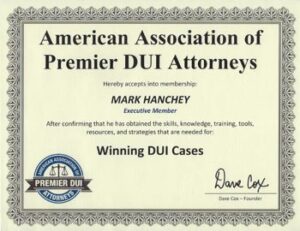





The Law Firm of Mark S. Hanchey and Ben Peterson represents individuals injured in motor vehicle crashes throughout Colorado Springs and the surrounding areas. Summer road trip conditions often create preventable hazards that lead to significant injuries, vehicle damage, and insurance disputes.
Understanding why these crashes happen can help drivers stay safer and recognize when negligence plays a role in a collision.
Heavy vacation traffic and summer congestion 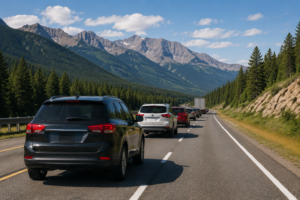
Colorado’s summer travel season brings visitors from across the country. Popular destinations such as Estes Park, the Royal Gorge, and ski towns in the mountains lead to heavy traffic buildup on major highways.
Stop-and-go traffic increases the likelihood of rear-end collisions. Drivers who are unfamiliar with local traffic flow may brake suddenly or fail to maintain safe spacing. When vehicles bunch together, even a small delay in reaction time can cause a chain-reaction crash.
Tourist congestion also affects urban areas like Colorado Springs, where weekend travel spikes near attractions and event locations.
Distracted driving during road trips
Long drives often lead to increased distraction inside the vehicle. Common distractions include navigation systems, mobile phones, adjusting music, or conversations with passengers.
On summer road trips, drivers may also take photos, check maps, or search for nearby stops. These actions reduce reaction time and increase the chance of missing brake lights ahead.
Even a brief moment of inattention can lead to a rear-end impact, especially in congested traffic where stops happen quickly and unexpectedly.
When you need legal help, Mark Hanchey and Ben Peterson are here to guide you through it all. One step at a time. Reach out today for legal support. Get The Law Firm of Mark S. Hanchey and Ben Peterson fighting for you.
With You Every Step of the Journey
Tailgating and speed inconsistency on highways
Following too closely remains one of the leading causes of rear-end collisions. On highways such as I-25 and I-70, traffic speeds can shift quickly due to merging vehicles, construction zones, or congestion near exits.
Drivers who tailgate often do not have enough space to stop safely when traffic slows. Speed inconsistency makes this worse, since vehicles may move from high-speed flow to near stops within seconds.
Maintaining safe following distance is one of the most effective ways to reduce rear-end crash risk during peak travel seasons.
Mountain driving and sudden braking risks
Colorado’s mountain roads add another layer of complexity. Steep grades, sharp curves, and changing elevation require frequent braking.
Drivers unfamiliar with these conditions may brake too hard or too late. Vehicles traveling downhill may also take longer to stop due to gravity and road conditions.
Rear-end crashes often occur when one driver slows for a curve or scenic view and the following driver does not adjust in time.
Construction zones and lane shifts
Summer is peak construction season across Colorado highways. Lane reductions, shifting traffic patterns, and reduced speed limits create frequent stopping points.
Rear-end collisions are common in these zones due to sudden slowdowns and unclear merging patterns. Drivers may be focused on navigation or surrounding scenery and fail to notice traffic congestion ahead.
Paying close attention to signage and brake lights is critical in construction-heavy areas.
Tourist unfamiliarity and rental vehicles
Many summer drivers are unfamiliar with Colorado roads, especially those renting vehicles for vacations. Unfamiliarity with vehicle controls, GPS instructions, or road layouts can cause hesitation or delayed reactions.
Out-of-state drivers may also misjudge stopping distances at higher elevations or under changing weather conditions. This can lead to sudden braking and rear-end impacts from following vehicles.
Rental vehicles also contribute to inconsistent driving behavior, as drivers adjust to different vehicle sizes and braking systems.
Bridgette Carabajal I've had the pleasure of working with Mr. Hanchey on two occasions, and each interaction has been nothing short of exceptional. His professional demeanor, coupled with the outstanding support from his staff significantly alleviated any anxieties I had. I am thoroughly satisfied with the outcomes achieved. Should the need for legal representation arise in the future, Mr. Hanchey will undoubtedly be my first choice. Lucas Garcia Mark Hanchey has been excellent. I spoke with him last minute before my court date. He still showed up to court with me and was very caring and helped me before I had even officially hired him. I felt like he cared about me and my case. He knows his craft very well and you can tell that the judge and other attorneys respect him when he is in court. He is also very kind. I recommend him to anyone. An excellent attorney. Renee Braucht I had an amazing experience with the Hanchey Law Firm! Mr. Hanchey got me the absolute best result I could have imagined for my case. I can’t even tell you how many times I’ve heard, “wow, you must have had a really good lawyer!” when discussing the result. I live far from Colorado Springs, but I will forever make the trip for this firm when I need them! Highly recommend! David Walker I have needed to use a lawyer a couple of times over the past several years and have used Mark Hanchey. He is a very down to earth person who has always treated me with dignity and has always been straight forward. His staff has also been professional and friendly. Each time I used Mark Hanchey the result was a positive one. I also think his fees are reasonable. I cant say enough good about Mark Hanchey.
Sun glare and summer weather changes
Colorado summers often include bright sun glare during morning and evening travel hours. Reduced visibility makes it harder to see brake lights and traffic slowdowns.
Sudden summer thunderstorms can also create wet roads and reduced traction. Drivers who do not adjust speed for conditions may be unable to stop in time.
These environmental factors increase the risk of rear-end crashes even when traffic is light.
Driver fatigue on long road trips
Extended driving periods can lead to fatigue, which slows reaction time and reduces awareness. Summer road trips often involve early departures, long highway stretches, and late arrivals.
Fatigued drivers may miss changes in traffic flow or react too slowly to braking vehicles ahead. Even mild fatigue increases the risk of rear-end collisions.
Taking regular breaks and sharing driving responsibilities helps reduce this risk.
What to do after a rear-end collision in Colorado
After a rear-end crash, drivers should prioritize safety and documentation. Moving to a safe location, checking for injuries, and contacting emergency services are important first steps.
Documentation of the scene, vehicle damage, and witness information can help support an insurance or legal claim. Colorado law may allow injured individuals to seek compensation when another driver’s negligence caused the crash.
More detailed guidance is available at https://hancheylaw.com/what-to-do-immediately-after-a-car-accident-in-colorado/
For those pursuing claims, additional information can be found here:
https://hancheylaw.com/how-to-file-a-car-accident-claim-in-colorado/
Traffic-related violations or contributing driver behavior may also be relevant in some cases:
https://hancheylaw.com/understanding-common-traffic-violations-in-colorado/
Legal support after a rear-end accident
Rear-end collisions may appear straightforward, but fault disputes and insurance challenges are common. Injuries such as whiplash, back strain, and head trauma can also develop symptoms after the initial crash.
Legal review can help determine liability, evaluate insurance coverage, and pursue compensation for medical expenses and other losses.
Speak With a Trusted Colorado Springs Personal Injury Attorney Today
If you were injured in a rear-end collision during a summer road trip in Colorado, legal guidance can help protect your rights. The Law Firm of Mark S. Hanchey and Ben Peterson provides experienced representation for individuals injured in motor vehicle accidents. Contact our office for a free consultation to discuss your case.
Disclaimer
This article is for informational purposes only and is not legal advice. Consult an attorney about your specific situation.