Spring in Colorado Springs brings vibrant community events, street fairs, and festivals that draw both residents and visitors outdoors. While these events contribute to the city’s lively atmosphere, they also dramatically increase pedestrian traffic, which can raise the risk of accidents. The Law Firm of Mark S. Hanchey and Ben Peterson often handles cases where pedestrians are injured in these scenarios, guiding victims through complex liability questions. Pedestrian accidents can occur in crosswalks, on sidewalks, in parking lots, and even in areas designated for events. Many factors contribute to accidents, including distracted drivers, poorly marked pedestrian zones, insufficient barriers, and road conditions affected by winter weather or ongoing construction projects. The first step in protecting yourself after a pedestrian accident is understanding the circumstances that may lead to liability and identifying which parties could be responsible for compensating you for medical bills, lost wages, pain, and suffering.



Common Causes of Spring Pedestrian Accidents 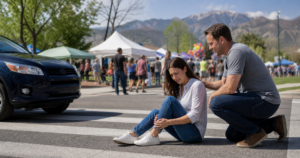
Increased activity during spring events naturally creates a higher risk for pedestrian incidents. Drivers who are unfamiliar with crowded streets, distracted by event signage, or navigating temporary traffic patterns can inadvertently cause harm. Pedestrians themselves may be distracted by their surroundings, fail to use marked crosswalks, or underestimate the speed and proximity of approaching vehicles. Additional hazards include temporary construction, uneven pavement, and insufficient lighting in areas where event activities extend into the evening. Accidents can also result from mechanical failures, such as vehicle brake malfunctions, or environmental conditions like sudden rainfall, making sidewalks slippery. Every detail—from driver attentiveness to municipal infrastructure—plays a role in determining both the cause of the accident and the potential avenues for compensation.
Determining Liability: Drivers, Organizers, and Municipal Responsibility
Liability in pedestrian accidents can involve multiple parties, and identifying who is responsible requires a careful investigation of the circumstances surrounding the incident. Drivers are often the first focus in these cases, especially if negligence can be proven. A driver who exceeds the speed limit, ignores traffic signals, is distracted by a phone, or fails to yield at a crosswalk may be directly responsible for a pedestrian’s injuries. Event organizers may also share liability if the accident occurs in areas they manage. Organizers have a duty to ensure that pedestrian areas are safe, which includes maintaining clear pathways, erecting visible barriers, providing adequate signage, and coordinating with local authorities to manage vehicle and foot traffic. Failing to fulfill these responsibilities can expose an organizer to premises liability claims. Municipalities may also bear responsibility when infrastructure issues contribute to accidents. If a city fails to maintain sidewalks, repair street hazards, or properly mark crosswalks, the government entity could be held accountable under certain exceptions to sovereign immunity in Colorado law. In many cases, liability is shared among multiple parties, with compensation adjusted according to the percentage of fault assigned to each party. Colorado’s comparative negligence laws require courts and insurance companies to evaluate each party’s role carefully, which can significantly influence the amount of damages recovered.
When you need legal help, Mark Hanchey and Ben Peterson are here to guide you through it all. One step at a time. Reach out today for legal support. Get The Law Firm of Mark S. Hanchey and Ben Peterson fighting for you.
With You Every Step of the Journey
Types of Damages Available to Pedestrian Accident Victims
Victims of pedestrian accidents may be entitled to a wide range of damages to address the financial, physical, and emotional consequences of their injuries. Compensation often includes coverage for medical expenses, such as hospital bills, surgical procedures, rehabilitation, and ongoing physical therapy. Lost wages and diminished earning capacity are also common, particularly if the injury affects a victim’s ability to return to work at full capacity. Pain and suffering are considered for both physical discomfort and emotional distress resulting from the accident, while property damage may cover the replacement of personal belongings, such as smartphones, laptops, or other items damaged during the incident. In more severe cases, long-term disability or permanent impairment may also be compensable, underscoring the importance of thorough documentation and legal representation in pursuing the full scope of damages available.
The Importance of Evidence Collection
Documenting every aspect of a pedestrian accident is critical to establishing liability and maximizing compensation. Victims should obtain a police report immediately, which provides an official account of the incident and may include witness statements. Photographs of the accident scene, surrounding environment, vehicles involved, and visible injuries serve as essential evidence. Witness testimony, if available, can corroborate the victim’s account and help determine fault. Maintaining a detailed record of medical treatment, including appointments, prescriptions, and therapy sessions, is essential for substantiating claims. Additionally, keeping a journal of physical and emotional effects can strengthen claims for pain and suffering. Consulting with an experienced attorney early in the process ensures that all evidence is properly gathered and preserved, avoiding pitfalls that could limit recovery.
Bridgette Carabajal I've had the pleasure of working with Mr. Hanchey on two occasions, and each interaction has been nothing short of exceptional. His professional demeanor, coupled with the outstanding support from his staff significantly alleviated any anxieties I had. I am thoroughly satisfied with the outcomes achieved. Should the need for legal representation arise in the future, Mr. Hanchey will undoubtedly be my first choice. Lucas Garcia Mark Hanchey has been excellent. I spoke with him last minute before my court date. He still showed up to court with me and was very caring and helped me before I had even officially hired him. I felt like he cared about me and my case. He knows his craft very well and you can tell that the judge and other attorneys respect him when he is in court. He is also very kind. I recommend him to anyone. An excellent attorney. Renee Braucht I had an amazing experience with the Hanchey Law Firm! Mr. Hanchey got me the absolute best result I could have imagined for my case. I can’t even tell you how many times I’ve heard, “wow, you must have had a really good lawyer!” when discussing the result. I live far from Colorado Springs, but I will forever make the trip for this firm when I need them! Highly recommend! David Walker I have needed to use a lawyer a couple of times over the past several years and have used Mark Hanchey. He is a very down to earth person who has always treated me with dignity and has always been straight forward. His staff has also been professional and friendly. Each time I used Mark Hanchey the result was a positive one. I also think his fees are reasonable. I cant say enough good about Mark Hanchey.
Role of Legal Representation
Navigating a pedestrian accident claim in Colorado Springs can be complex, especially when multiple parties may share liability. An experienced attorney can assess the accident, identify all potentially responsible parties, and develop a strategy for pursuing compensation. Legal representation includes negotiating with insurance companies, investigating circumstances that contributed to the accident, obtaining expert testimony if necessary, and representing the victim in court proceedings. The Law Firm of Mark S. Hanchey and Ben Peterson has extensive experience in personal injury and pedestrian accident cases and can guide victims through every step of the process. Their team ensures that claims are pursued effectively, with the goal of securing full and fair compensation while minimizing the stress and uncertainty often associated with these cases.
Preventive Measures for Pedestrians
While accidents cannot always be avoided, pedestrians can take measures to reduce their risk during spring events. Always use marked crosswalks and adhere to pedestrian signals, remain alert to surrounding traffic, and avoid distractions such as phones or headphones. Wearing bright clothing or reflective gear increases visibility to drivers, especially during evening events or in areas with heavy traffic. Awareness of temporary street closures, construction zones, and event-specific traffic patterns can also help reduce risk. Being proactive about safety and understanding your surroundings enhances pedestrian safety and may also influence fault determinations in the event of an accident.
Recovery Process and Next Steps
Following a pedestrian accident, prioritizing medical care and documenting injuries is critical. Victims should seek professional evaluation, follow prescribed treatment plans, and preserve records of all medical consultations. Contacting an attorney promptly helps ensure that all evidence is preserved and deadlines for filing claims or lawsuits are met. Attorneys can evaluate insurance coverage options, determine the viability of claims against drivers, event organizers, or government entities, and advise on the most effective strategy for pursuing compensation. In Colorado Springs, timely action and professional guidance are essential for protecting legal rights and achieving the best possible outcome after an accident.
Springtime events in Colorado Springs enrich the community but also increase the risk of pedestrian accidents. Victims face a complex web of potential liability, including drivers, event organizers, and government agencies. Understanding who may be responsible, documenting every aspect of the incident, and securing skilled legal representation are essential to navigating this process successfully. The Law Firm of Mark S. Hanchey and Ben Peterson provides trusted, knowledgeable guidance for accident victims, helping to recover compensation for medical expenses, lost income, pain, and suffering. Prompt action and thorough preparation significantly improve the chances of a fair and comprehensive recovery. Pedestrian safety awareness, combined with informed legal support, empowers victims to protect their rights and pursue justice effectively.
Disclaimer
This article is for informational purposes only and is not legal advice. Consult an attorney about your specific situation.
To learn more about this subject click here: How to Prove Negligence in a Colorado Pedestrian Accident