Motorcycle rally season in Colorado can bring more riders, heavier traffic, and unfamiliar routes through Colorado Springs and the Front Range. After a serious motorcycle crash, liability usually depends on evidence showing who acted carelessly, how that conduct caused the collision, and how Colorado’s comparative negligence rules apply. Fault may rest with a driver, another rider, a vehicle owner, a business, a road maintenance entity, or more than one party. Strong claims are built early, before skid marks fade, bikes are repaired, witnesses leave town, and insurance companies shape the story.
Motorcycle Rally Season in Colorado: How Liability Is Determined After a Serious Crash 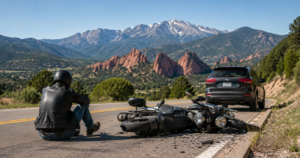
Motorcycle rallies, charity rides, club events, and summer road trips are part of Colorado riding culture. Riders come through Colorado Springs for scenic routes, open roads, and access to mountain passes. During warmer months, more motorcycles share roads with commuters, tourists, trucks, rideshare drivers, and drivers who may not be looking for bikes.
When a crash causes head injury, spinal injury, fractures, road rash, internal trauma, or wrongful death, the legal question is rarely as simple as “who hit whom.” Liability turns on evidence. It also turns on Colorado law, insurance coverage, and whether more than one person contributed to the crash.
For injured riders and families, the goal is not to argue stereotypes about motorcycles. The goal is to prove what happened.
Why Rally Season Can Create Liability Disputes
Rally season can increase risk because road conditions and traffic patterns change. A driver who normally sees one motorcycle during a commute may suddenly encounter a staggered group ride. Visitors may rely on GPS, make late turns, or slow unexpectedly near scenic areas. Riders may also be traveling roads that are unfamiliar, near mountain routes west of Colorado Springs.
Common factors in serious rally-season motorcycle crashes include:
Drivers turning left across a motorcycle’s path
Sudden lane changes near groups of riders
Following too closely in traffic
Distracted driving near event areas or hotel corridors
Speed disputes on rural roads
Debris, gravel, uneven pavement, or construction zones
Impaired driving after social events
Mechanical problems after long rides
Poor visibility during afternoon storms or changing mountain light
None of these facts automatically proves liability. A lawyer looks at how each factor connects to the collision and injuries.
Colorado’s Fault Rule in Motorcycle Accident Cases
Colorado uses a comparative negligence system in negligence cases. In plain language, an injured person’s compensation can be reduced by that person’s share of fault. If the injured person’s fault is too high under Colorado law, recovery may be barred.
This makes the assignment of fault one of the most contested parts of a serious motorcycle crash case. For example, an insurance company may argue that a rider was speeding, riding too close to another motorcycle, not wearing proper protective gear, or failing to avoid a hazard. Those arguments may be exaggerated or unsupported. They still matter because even a small shift in fault can affect the value of a claim.
A careful case review asks:
What did each driver or rider do before impact?
Who had the right of way?
Were traffic signals, lane markings, or signs involved?
Did any person violate Colorado traffic laws?
Could the crash have been avoided with reasonable care?
Did any alleged rider mistake actually cause the crash?
This is where a Colorado Springs motorcycle accident lawyer can help by separating assumptions from proof. The motorcycle accident team at https://hancheylaw.com/colorado-springs-motorcycle-accident-lawyers/ can review liability issues, evidence, and insurance questions after a serious crash.
When you need legal help, Mark Hanchey and Ben Peterson are here to guide you through it all. One step at a time. Reach out today for legal support. Get The Law Firm of Mark S. Hanchey and Ben Peterson fighting for you.
With You Every Step of the Journey
Evidence That Helps Determine Liability
The police report is only the starting point. Officers may not see the crash happen. They may rely on witness statements, driver statements, road marks, vehicle positions, and available photos. In a rally-season crash, witnesses may leave the area quickly, which makes early investigation vital.
Useful evidence may include:
Crash scene photos and videos
Body camera footage or dash camera footage
Nearby business, hotel, or traffic camera footage
911 calls and dispatch records
Witness names, statements, and contact information
Motorcycle damage patterns
Helmet, jacket, and gear damage
Vehicle event data, when available
Cell phone records, when distraction is suspected
Alcohol or drug testing records
Road design, signage, and maintenance records
Medical records linking injuries to the crash
Accident reconstruction may be needed when the impact was severe, vehicles moved after the crash, or people disagree about speed and lane position. The firm’s article on expert witnesses in Colorado motorcycle accident trials at https://hancheylaw.com/the-role-of-expert-witnesses-in-colorado-motorcycle-accident-trials/ explains why reconstruction, medical, and economic experts can become part of a contested case.
Bridgette Carabajal I've had the pleasure of working with Mr. Hanchey on two occasions, and each interaction has been nothing short of exceptional. His professional demeanor, coupled with the outstanding support from his staff significantly alleviated any anxieties I had. I am thoroughly satisfied with the outcomes achieved. Should the need for legal representation arise in the future, Mr. Hanchey will undoubtedly be my first choice. Lucas Garcia Mark Hanchey has been excellent. I spoke with him last minute before my court date. He still showed up to court with me and was very caring and helped me before I had even officially hired him. I felt like he cared about me and my case. He knows his craft very well and you can tell that the judge and other attorneys respect him when he is in court. He is also very kind. I recommend him to anyone. An excellent attorney. Renee Braucht I had an amazing experience with the Hanchey Law Firm! Mr. Hanchey got me the absolute best result I could have imagined for my case. I can’t even tell you how many times I’ve heard, “wow, you must have had a really good lawyer!” when discussing the result. I live far from Colorado Springs, but I will forever make the trip for this firm when I need them! Highly recommend! David Walker I have needed to use a lawyer a couple of times over the past several years and have used Mark Hanchey. He is a very down to earth person who has always treated me with dignity and has always been straight forward. His staff has also been professional and friendly. Each time I used Mark Hanchey the result was a positive one. I also think his fees are reasonable. I cant say enough good about Mark Hanchey.
Who May Be Liable After a Rally-Season Motorcycle Crash?
The at-fault driver is often the first person considered. A driver may be liable for turning left without yielding, texting, drifting into a lane, driving impaired, speeding, or failing to check blind spots. Many crashes occur because a driver looks for another car but fails to register a motorcycle.
Another rider may also share fault in some group-ride collisions. For example, a rider who makes an unsafe pass, brakes suddenly without reason, rides impaired, or crowds another motorcycle may contribute to a crash.
A vehicle owner or employer may become part of the case if the at-fault driver was operating a company vehicle or acting within the scope of work. Trucking companies, delivery services, and rideshare-related issues may raise coverage questions.
A government entity or contractor may be involved when dangerous road design, missing signs, unsafe construction zones, or poor maintenance contributes to the crash. These claims have special notice rules and tight deadlines, so they require fast review.
A business or event-related party may be examined in limited cases. Liability questions may arise if negligent security, overserving alcohol, unsafe parking control, or poor traffic management played a role. These claims are fact-specific and should not be assumed without investigation.
How Insurance Companies Try to Shift Blame
Motorcycle riders often face unfair assumptions. An adjuster may imply that the rider accepted the risk by riding, was probably speeding, or could have avoided the crash. Insurance companies may also search medical records for prior injuries, argue that treatment was excessive, or question whether lost income is tied to the crash.
A strong response focuses on documentation. That may include consistent medical care, clear witness statements, repair estimates, photos of protective gear, and a detailed damages package. The broader personal injury team at https://hancheylaw.com/colorado-springs-personal-injury-lawyers/ helps injured people understand how liability, damages, and negotiations fit together.
Helmet, Gear, and Rider Conduct Issues
Colorado motorcycle law includes equipment and safety standards for motorcycles, autocycles, and low-power scooters. Gear and equipment can become part of a liability dispute, especially when head injuries, visibility, lighting, brakes, tires, or mirrors are involved.
A lack of certain gear does not automatically decide fault. The real question is causation. Did the alleged conduct cause the crash? Did it cause or worsen a specific injury? For example, an insurer may raise helmet use in a head injury case, but that argument is different from proving who caused the collision itself.
Rider conduct can matter when there is evidence of impairment, excessive speed, unsafe lane changes, or racing. Yet Colorado law does not allow an insurer to replace proof with stereotypes. A rider is entitled to the same fact-based analysis as any other injured person.
Serious Injuries Change the Stakes
Motorcycle crashes often cause injuries that affect work, family life, and independence. A broken leg may require surgery and months away from work. A traumatic brain injury may affect memory, mood, sleep, and relationships. A spinal injury may require lifetime care.
Damages in a serious motorcycle accident claim may include:
Emergency care and hospital bills
Surgery, imaging, medication, and follow-up treatment
Physical therapy and rehabilitation
Lost wages and reduced earning capacity
Pain, physical limitations, and emotional distress
Permanent impairment or disfigurement
Home modifications or future care needs
Wrongful death damages when a family loses a loved one
Because severe injuries can take months to understand, early settlement offers should be reviewed carefully. A fast payment may not account for future surgery, long-term therapy, or lost earning capacity.
What to Do After a Serious Motorcycle Crash in Colorado Springs
After medical needs are addressed, evidence preservation becomes a priority. Riders and families can help protect a claim by taking practical steps.
Get medical care and follow treatment instructions.
Save the motorcycle, helmet, clothing, boots, and damaged gear.
Take photos of injuries, vehicle damage, road conditions, and the scene.
Write down witness names and contact information.
Avoid recorded statements before legal advice.
Do not post crash details, photos, or blame discussions on social media.
Keep bills, receipts, missed work records, and insurance letters.
The article at https://hancheylaw.com/what-to-do-immediately-after-a-motorcycle-accident-in-colorado/ offers more guidance on the first steps after a motorcycle crash.
How an Attorney Helps Determine Liability
An attorney’s role is to build a clear, evidence-based story of what happened. That may involve obtaining reports, contacting witnesses, inspecting the crash scene, preserving camera footage, reviewing medical records, dealing with insurers, and consulting experts.
For rally-season crashes, timing matters. Out-of-town witnesses may become difficult to locate. Video may be deleted. Road work may change the scene. A damaged motorcycle may be sold or repaired. Early legal help can preserve evidence before it disappears.
The Law Firm of Mark S. Hanchey and Ben Peterson offers free consultations and represents injured people in Colorado Springs and across Colorado. The firm can evaluate liability, explain your options, and help you decide what steps make sense for your situation. To request a confidential consultation, visit https://hancheylaw.com/contact/.
This article is for informational purposes only and is not legal advice. Consult an attorney about your specific situation.